Designing a Microsoft Teams Boardroom
Posted by Video Conference Gear on 7/21/2026
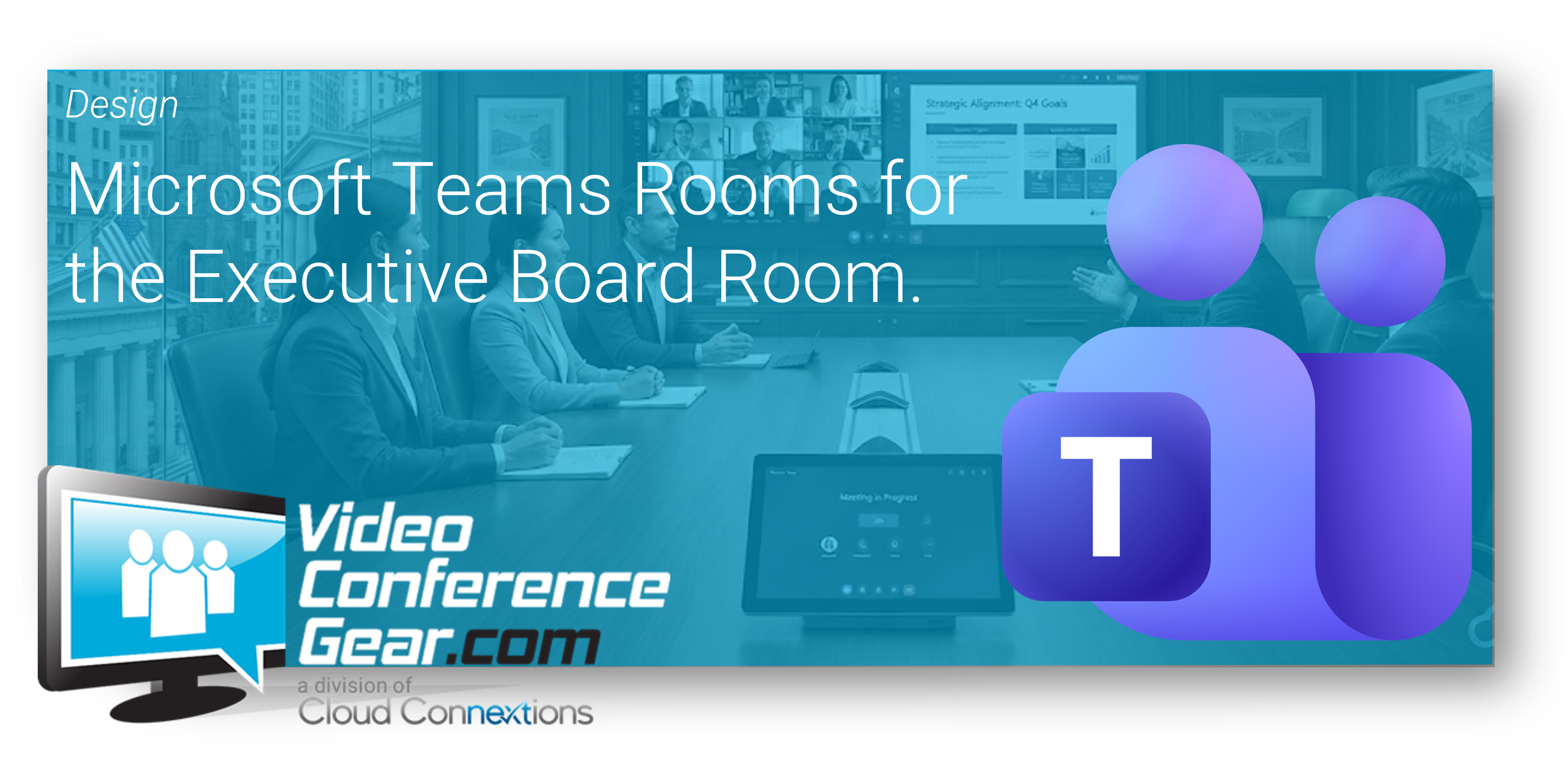
Designing a Microsoft Teams boardroom is not simply a matter of choosing a certified room kit. The room, table, meeting style, acoustics, cameras, displays, content, and support expectations all affect what will work well.
That does not mean you need to become an AV engineer before asking for help. A good design partner should guide the discovery process, explain the tradeoffs, and turn your needs into a system that is easy to use and support.
This guide explains the most important decisions, where boardroom projects commonly go wrong, and when a straightforward video bar is enough versus when a modular Teams Rooms design makes more sense.
Need help with a boardroom project? Start a chat, email us, or send the room information you already have. A photo, floor plan, approximate room size, or even a description of what is not working today is enough to begin the conversation.
What makes a Teams boardroom different from a standard meeting room?
A boardroom usually carries higher expectations than a typical conference room. It may host executive meetings, board presentations, customer conversations, interviews, confidential discussions, and meetings with outside organizations.
The technology needs to work for people who may use the room only occasionally and do not want to learn a complicated control system. Remote participants need to see more than a distant group at the end of a long table. People in the room need to read shared content without losing sight of the far-end participants. Support teams need a practical way to identify and recover from problems.
These expectations make several factors especially important:
- Clear audio from every normal seating position
- Useful camera views throughout a long or unusually shaped room
- Displays sized for the actual content and farthest viewer
- Simple meeting join and content-sharing workflows
- A plan for Zoom, Webex, or other outside meetings when required
- Network, power, cabling, furniture, and mounting coordination
- A support and recovery path that matches the importance of the room
The best boardroom is not necessarily the one with the most equipment. It is the one that supports the meetings people actually hold.
Start with the meeting experience, not the equipment list
Before comparing products, describe what a successful meeting should feel like.
Who normally sits at the table? Does the chairperson or head of the table need a priority view? Will presenters stand or move around the room? Are spreadsheets, drawings, dashboards, or detailed documents regularly shared? Do remote participants need to see a whiteboard? How often does the room join meetings hosted outside Microsoft Teams?
Room details also matter. Approximate dimensions, table shape, seating, windows, hard surfaces, ceiling conditions, and the intended display wall can quickly reveal whether a simple system is likely to work.
You do not need every answer before contacting an integrator. These are the questions the design process should help resolve. Sharing whatever is already available can prevent an early equipment recommendation from becoming an expensive assumption.
Should the boardroom use a video bar or a modular Teams Rooms system?
A certified video bar can be a strong choice when one front-of-room device provides appropriate camera framing, microphone coverage, loudspeaker performance, and connectivity for the space. It can reduce installation complexity and create a consistent user experience.
A modular system separates functions such as the room computer, cameras, microphones, digital signal processor, loudspeakers, displays, and controls. This approach can provide more flexibility when the room or meeting experience requires it.
There is no universal seat-count rule that determines the answer.
| A video bar may fit when | A modular design should be evaluated when |
|---|---|
| The table and room have straightforward geometry | The room is long, wide, unusually shaped, or acoustically difficult |
| One camera position provides a useful view of everyone | Several camera views or presenter positions are needed |
| Integrated microphones can clearly cover all talkers | Distributed microphones, DSP, or voice reinforcement may be required |
| One or two displays support the normal workflow | Multiple displays, sources, layouts, or room controls must work together |
| Cable distances and installation are simple | Equipment must be extended, remotely located, or integrated with other systems |
The practical question is not whether a product is marketed for a large room. The question is whether the complete design covers the people, content, and workflows in your specific room.
Explore current Microsoft Teams Rooms solutions and large-room options, then confirm the room design before treating a product category as a final recommendation.
Windows or Android for Microsoft Teams Rooms?
Microsoft Teams Rooms is available on Windows and Android. Both platforms support the core Teams Rooms experience, but they are not identical. Features may arrive at different times, and support for cameras, peripherals, room control, management, security policies, and display formats can vary.
The choice should be based on the room's required functions and the organization's operational standards, not a general claim that one platform is always better.
Microsoft maintains a current Teams Rooms feature comparison. The selected hardware and manufacturer documentation should also be checked because certification does not mean every device supports every platform feature.
How should boardroom audio be planned?
Audio problems damage a meeting faster than almost any other issue. Remote participants may tolerate a less-than-perfect camera view, but they cannot participate effectively when speech is distant, inconsistent, noisy, or interrupted by echo.
Good audio planning considers where people speak, how far they are from microphones, the room's hard surfaces, HVAC noise, loudspeaker placement, and the relationship between the microphones, speakers, and acoustic echo cancellation.
Table microphones place pickup closer to participants but affect furniture and cabling. Ceiling microphones keep the table clear but depend heavily on ceiling height, placement, room acoustics, noise, and processing. Neither approach is automatically better.
For a boardroom, coverage should be considered from every expected speaking position, not inferred from a single published pickup-distance number.
How many cameras does a boardroom need?
One camera may work well when it produces a useful view of all participants. In a long boardroom, however, the people farthest from a front camera can appear small, and participants may block one another.
Some rooms benefit from separate views for the main table, head of table, presenter, whiteboard, or overflow seating. Automated framing and speaker tracking can improve the experience, but terms such as intelligent camera, group framing, speaker tracking, and multi-camera are not interchangeable. The behavior may come from Microsoft Teams, the camera manufacturer, or an integrated control and tracking system.
Camera quantity should follow the views the meeting requires. More cameras without a clear plan can create confusing switching and unnatural sightlines.
How large should the displays be?
Display planning begins with the farthest viewer and the smallest content people need to read. A screen that is adequate for remote faces may still be too small for spreadsheets, drawings, or detailed presentations.
One display may be sufficient for a focused meeting workflow. Two displays can keep people and content visible at the same time. Ultrawide or larger-format designs may support additional layouts, but only when the platform, wall space, viewing distance, camera position, and meeting style support the choice.
Also consider mounting height, glare, reflections, camera placement, service access, and how a future replacement will fit the wall. Display size should be calculated from the viewing task rather than chosen from room capacity alone.
Content sharing and outside meetings need a clear workflow
The room should make common tasks obvious:
- Join a scheduled Teams meeting
- Start an unscheduled call
- Share content from an employee or guest laptop
- Play presentation audio when needed
- Join meetings hosted on other platforms
- Recover when the normal workflow does not work
Microsoft supports documented third-party meeting options, but the experience depends on the invitation, Teams Rooms platform, configuration, network access, and outside meeting provider. It may not provide the same features as a native Teams meeting.
If outside meetings are common, discuss the expected experience and whether an approved laptop-based connection is needed as a fallback. The goal is to give users a workable path without pretending every meeting platform will behave identically.
Do not leave infrastructure until installation day
Many boardroom problems begin outside the equipment list. Displays need appropriate backing and power. Cameras need the correct location and cable path. Table devices require coordinated cutouts and access. Ceiling microphones and loudspeakers must coexist with lighting, HVAC, sprinklers, and finished architecture.
The design should address:
- Wired network connections and required switch capacity
- Power at displays, the table, cameras, and equipment locations
- Cable pathways and the distance limits of USB and video connections
- Furniture access, cable cubbies, and controller placement
- Equipment ventilation and service access
- Display and camera mounting
- Ceiling coordination
- Room resource account, licensing, security, and management ownership
Microsoft recommends wired networking for Teams Rooms and treats the systems as purpose-built room appliances. Planning the IT requirements alongside the AV design avoids preventable delays during deployment.
Common Microsoft Teams boardroom design mistakes
- Choosing a room system from seat count alone
- Assuming certified hardware guarantees audio and camera coverage
- Selecting displays before considering content and the farthest viewer
- Treating a microphone pickup specification as a completed audio design
- Ignoring external meetings and guest content sharing
- Waiting until installation to address cabling, furniture, power, or network needs
- Assuming every Windows or Android system supports the same functions
- Testing devices individually without holding a realistic meeting
Microsoft certification is important because it identifies tested products and configurations. It does not validate the acoustics, sightlines, placement, infrastructure, or user workflow in a particular room.
What should a boardroom design partner help you decide?
A useful design conversation should make the project clearer, not hand you a longer homework assignment.
The partner should help determine:
- Whether an integrated or modular architecture fits the room
- Which audio approach covers the real talker positions
- Which camera views remote participants need
- What display arrangement supports the content and seating
- How users will share content and join outside meetings
- What network, power, cabling, furniture, and construction work is required
- What installation, configuration, testing, training, and support are included
The proposal should connect these needs to the recommended equipment and services. It should also identify assumptions, customer responsibilities, and exclusions so that important work is not discovered after the purchase.
Get help with your Microsoft Teams boardroom
You do not need a completed specification or a perfect set of drawings to start.
Tell us what you are trying to accomplish, what room you are working with, and where the current uncertainty is. If available, send a floor plan, room dimensions, table size, photographs, or an existing equipment list. If none of that is ready, a conversation is still a reasonable first step.
Video Conference Gear and Cloud Connextions can help organizations across the United States evaluate Microsoft Teams boardroom equipment, design, installation, and integration needs.
Start a chat, email us, or contact the team to discuss your boardroom.